The show, Caroline or Change, was mightily impressive; a through-sung musical investigating Southern race relations in the 1960s through the prism of a black maid working for a Jewish household. Tony Kushner's initial dramatic act of anthropomorphising the household objects in what is otherwise a piece of musical naturalism helped to heighten and open the audience up, like in Angels in America, to the extraordinary nature of this very ordinary story. Jeanine Tesori's music formed occasionally moved into the operatic, using a range of musical influences from gospel to traditional Jewish modes to form a unique sound-world. Michael Longhurst direction was characteristically clear. As best demonstrated in his productions of Amadeus, They Drink it in the Congo, and A Number, Longhurst has a real skill for making very small stylistic decisions which best shines light and focus on the strengths of the written work as opposed to major changes which draw focus from the work to the director. In Caroline, this took the form of the use of a revolve, allowing the story to be effectively told to all three sides of the Minerva. Sharon D Clarke gave a showstopping performance, keeping in an anger that is only truly released in an Act 2 showpiece aria 'Lot's Wife'. The Broadway transfer of this production has just been postponed due to the virus but hopefully this underappreciated musical gets the audience it really deserves in it's first revival on Broadway.
Monday, 1 June 2020
Caroline or Change, Minerva Theatre- 1st June 2017
I travelled up to Chichester the week before the start of my A Levels to try and escape from the madness and the stress and dread of revision. Chichester is perfectly placed in comparison to suburban London as a spot to escape to. From passing what likes a settlement from Game of Thrones (which is in actuality Arundel- but from afar could be Kings Landing) on the terrible Southern train journey to the quaint English village (Chichester is a city in name only!), it was very easy to forget the terror of the upcoming few weeks.

Thursday, 28 May 2020
An Octoroon, Orange Tree Theatre- 29th May 2017
I have seen Ned Bennett’s Production of Branden Jacobs-Jenkins’
An Octoroon three times at both the Orange Tree theatre in Richmond and
in it’s successful transfer to the National Theatre and each time was a
profoundly different experience. In the Dorfman on the third visit, Bennett had
added pyrotechnics and crazier eccentricities to scale up the show to fit the
bigger space and to try and shock much the same audience who had seen Katie
Mitchell’s Cleansed in that same space just a few years earlier. The
second visit was towards the end of it’s first run at the Orange Tree, and word
had got around about just how stunning this production was. Bringing my friend
Harvey with me, we at 18 fitted into an uncharacteristically young audience in
the Richmond space; the production had found its audience and had attracted the
same crowd that flocked to see Pomona. However, it was the first visit to
this production that sticks in the memory most.
It was early in the run and the matinee audience was filled
with the regular Richmond matinee crowd- elderly and, I would venture, on the
conservative side of theatrical taste. They had seen that the theatre company
that has made its name on revivals of Rattigan and Shaw plays were mounting an
adaptation of a quaint melodrama by Dion Boucicault and thought it might make a
fun afternoon at the theatre. One of the joys of watching this profound and
challenging play was seeing the unease as Ken Nwosu as BJJ walked into the
centre of the theatre in his underwear before sitting within the audience in
his opening monologue on being a ‘black playwright’. That unease turned into
profound terror as Nwosu and Kevin Trainor (playing a representation of
Boucicault) circled each other screaming, before the theatre was plunged into darkness
as Snoop Dogg blared throughout before a live cellist accompanied a tap-dancing
br’er rabbit. As the melodrama itself started up, I could see one old lady
rocking back and forth with her hands over her ears. This visit, more than any
other time, I could see an example of an audience being really challenged about
what theatre was and could be, whether it was appreciated or not.
Re-reading the play yesterday as the video of the murder of
George Floyd at the hands of a Minneapolis policeman circulated around social
media, I was taken back to the fourth act of this play. Boucicault’s 1859 play is
a melodramatic entertainment surrounding a white, slave-owning protagonist George
Peyton saving an ‘octoroon’ (one eighth black) girl Zoe from evil, slave-owning
McClosky. The fourth scene, which Jacobs-Jenkins describes in his play as ‘the
sensation scene’, revolves around the Native American character Wahnotee
exposing McClosky’s villainy by showing a photo of McClosky killing Paul, a ‘slave
boy’. ‘BJJ’ breaks out of the play at this point to consider how to effectively
convey the shock of this moment to a modern-day audience, at which point a
large projection of a lynching is projected.
In Jackie Sibblies Drury’s Fairview, the
overwhelmingly white audience is directly asked to stand on the stage and let ‘people
of colour’ live their own lives free from the white gaze. That moment in the
fourth act of An Octoroon expresses much the same thing. Whether it’s
the developed photograph of the murdered Paul, the countless sickening photos
of lynching, the reports and videos of countless numbers of black people being
racially profiled by police in America and in the UK; there is something sick
about the white population that feeds off this need to see stories about black
people suffering at the hands of ‘evil’ white people. Yesterday, seeing less
people share the video and instead share examples of overt and covert white
supremacy was a step in the right direction at least yet still demonstrating a
kind of stasis in the brutalisation of black lives since the 19th
century.
Jacobs-Jenkin’s only major diversion from the plot of the
original melodrama is in the final act where, diverting away from the reunited
George and Zoe to a reflective and comical discussion between Dido and Minnie
in which, like most modern audiences trying to rationalise the plot of a melodrama,
they find that they either ‘zone out’ or find the whole thing pointless. The genius of this adaptation is that Branden
Jacobs-Jenkins transforms a pretty offensive and dated melodrama into a truly
nuanced and engaging work; one that really demands action from it’s audience
and only seems to gain ‘relevance’ over time.
Wednesday, 24 August 2016
Review Catch-Up: January
Due to exams, I have slightly neglected my reviews. To catch up, I've combined everything I've written on each production I've seen and added some bits to ones I have not written about (spectacularly poorly in some cases!!).
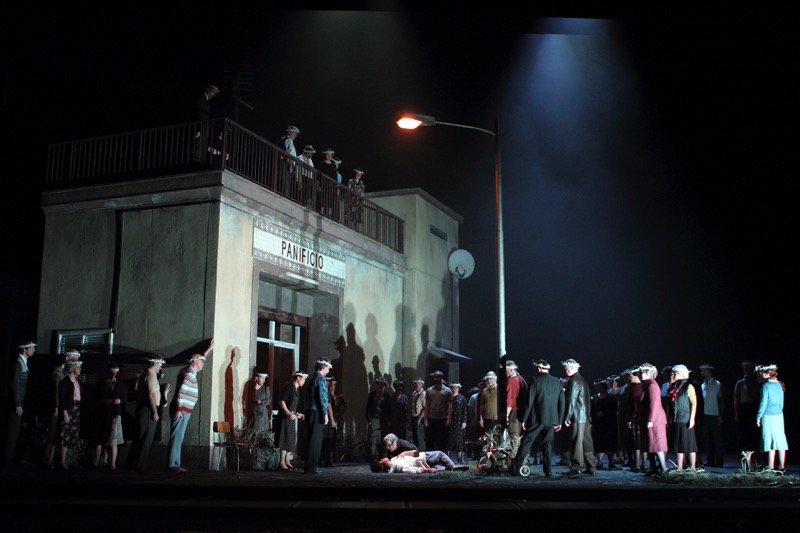
Cavalleria Rusticana/Pagliacci, Royal Opera House ****
Caryl Churchill's latest play is a magnificent meditation on loneliness is realised terrifically by James Macdonald. The jumps from Churchill's typical detached conversations to the terrifying streams of consciousness of Linda Bassett as Mrs Jarret wonderfully displace and confuse the audience but also contains a side-splittingly funny monologue about cats from Sally (Deborah Findlay) and an equally well constructed serious one from Vi (June Watson). It is so refreshing to see exiting new work containing wonderful parts for older female actors in a house which clearly acknowledges that everyone needs to be included in forging the future of theatre.
The Mother, Tricycle Theatre ***
Cavalleria Rusticana/Pagliacci, Royal Opera House ****
Damiano Micheletto has partially made up for his atrocious production of Guillaume Tell with a beguiling and sweet production of Mascagni and Leincavallo's verismo operas, only momentarily letting the action stagnate, patly due to a monotonous design. Pappanno delivers a typically lyrical and sumptuous interpretation of the score with some impressive lead performances Eve-Marie Westbroek and Aleksandrs Antonenko.
Funny Girl, Menier Chocolate Factory *****
 |
Funny Girl, Menier Chocolate Factory *****
Despite later controversy, Sheridan Smith gave a performance as good as Imelda Staunton's Mama Rose, bringing charm and a bundle of energy to Fanny Brice. Michael Mayer's production does the performance justice and, evidently since recent events, makes the production far more than just a Smith star vehicle.
Les Liaisons Dangereuse, Donmar Warehouse ***
 |
Les Liaisons Dangereuse, Donmar Warehouse ***
Josie Rourke's elegant production combined with Tom Scutt's lavish design and standout performances from Dominic West and Janet McTeer only partly disguise a play that loses the power struggle beneath relentless sex. This major flaw taints these talents, not least that of Morfydd Clarck who is a fast emerging star, making the most of an ill-written part after her blistering performance in Violence and Son last year at the Royal Court.
Grey Gardens, Southwark Playhouse ****
 |
Grey Gardens, Southwark Playhouse ****
Unlike most, I adored the first act of this superb musical as much as the more contemplative second act as it contains some of the best original music from Scott Frankel that I have heard since Bend Itl. Jenna Russell is divine whilst Sheila Hancock plays the older Edith with a devilish humour and Rachel Anne Rayham is a notably strong supporting member as young Edie Beale (who Jenna plays in the second act). The only hang up I had with Thom Sutherland's production was the numerous direct references to the source material making whole sections of the second act redundant to those who haven't watched the documentary. Despite this, the Southwark Playhouse continues to produce first class musicals in a superb venue.
Richard II, Barbican Theatre ***
 |
Richard II, Barbican Theatre ***
A standout performance from David Tennant is just enough to salvage an evening which Greg Doran seems hell bent to destroy by sucking the life out of Shakespeare's most poetically beautiful play with a reverent and dull production. Beginning the Kings and Country cycle, Tennant is the greatest part of the marathon but perhaps is the only truly brilliant aspect of the RSC's demonstration of it's waning influence in London.
Linda, Royal Court ****
 |
Linda, Royal Court ****
Nima Dumezueini is a powerhouse in Penelope Skinner's devastating play on societies mistreatment of middle aged women. Michael Longhurst makes full use of Es Devlin's masterful set to create a world full of people on the edge. This is a production and a play which shows the central role of the Court in showcasing artistic brilliance across the board.
Fear and Misery of the The Third Reich, Union Theatre ***
Gary Wilmott has brought was is claimed to be the first full production of Brecht's play to the Union and, if performed in August rather than in January, it could have been far more pertinent in explaining how sane people can succumb to the propaganda and fear-mongering pushed by politicians. We need a new adaptation to free the play and production from seeming dated despite Wilmott's best efforts to show that it is a situation that any group of people can fall into. This is a production and a play which, in the age of Brexit and Trump, is more thought- provoking than before.
 |
Fear and Misery of the The Third Reich, Union Theatre ***
Gary Wilmott has brought was is claimed to be the first full production of Brecht's play to the Union and, if performed in August rather than in January, it could have been far more pertinent in explaining how sane people can succumb to the propaganda and fear-mongering pushed by politicians. We need a new adaptation to free the play and production from seeming dated despite Wilmott's best efforts to show that it is a situation that any group of people can fall into. This is a production and a play which, in the age of Brexit and Trump, is more thought- provoking than before.
 |
Pelleas et Melisande, Barbican Hall **
This semi-staged production of Debussy's opera further demonstrates how awful Peter Sellars is as a director; it still astonishes me how revered he is in the opera world. Even the brilliance of stars such as Simon Rattle or Gerald Finley can save this dreadful evening, potentially the worst I've had at the opera with LED lights which contribute nothing and music which crumples in an over staged concert performance which can't decide whether it wants to place the staging or musical excellence in the fore-ground.
Bull, Young Vic ****
 |
Bull, Young Vic ****
Bartlett's play is revived in the Maria at the Young Vic with a new cast which brings fresh devastation to the text. Marc Wooton is a more sympathetic Thomas to Sam Troughton, but still has some venom in him so that the chemistry is still electric. Susannah Fielding's Isobel is venomous and delightfully vicious, making the interplay with Max Bennet's Tony partly harrowing but also hilarious.
Cymbeline, Sam Wannamaker Playhouse *****
 |
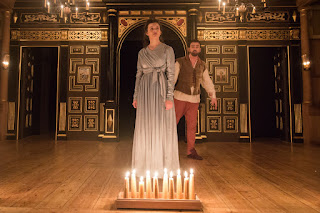
Cymbeline, Sam Wannamaker Playhouse *****
After studying Othello, I had started getting tired of Shakespeare and his half-hearted writings of female characters but Sam Yate's production in the breathtaking Sam Wannamker has restored my faith in the Bard. He uses the space simply whilst also exploiting the space's opportunities, turning Jupiter's visitation into something truly extraordinary. Newcomer Emily Barber brings real intelligence and strength to Innogen whilst the whole ensemble give a mix of emotional truth and beautiful comedy. A definitive production of Shakespeare's most underrated play.
 |
RSC Shakespeare on Screen series, Barbican Cinemas ***
To coincide with the King and Country season at the Barbican theatre, the RSC are also holding a season at the cinema which celebrates the various interpretations of these texts on screen. My experience of the season started with a panel discussion on the art of transferring Shakespeare to screen with Gregory Doran and Sir Ian Mckellan. This informative and highly entertaining discussion revealed facts such as the fact that Mckellans opening gasmask scene in Richard III was him breathing in iambic pentameter and that you must never call an television adaptation a film as 'there is no film involved'. This
Panel discussion was followed by a screening of the partially recording of Peter Hall's 1959 production of A Midsummers Night Dream featuring the enchanting Charles Laughton who showed us his magnificent Bottom. I remain sceptical about productions being filmed yet this is the most delightful one I have seen. The dated and traditional nature of the production charms and actors Vanessa Redgrave and Julian Glover show their tue talent in creating quality drama over many decades. Perhaps more pleasing than the production was the opening twenty minutes where Laughton takes us on a trip around Stratford-upon-Avon which both demonstrates his extraordinary affability and effortless charm.
Unfortunately, the screening of Othello wasn't quite as enjoyable. Despite a wonderful introduction from Sir Willard White, this near-complete version of the text both makes it long (3hours 30mins) and uncomfortable in it's depiction of race and gender. Trevor Nunn's production slips into the pitfalls of this racist and sexist play. Imogen Stubb's Desdemona is pitifully weak from the beginning, with no character development as Othello's rage increases. Whilst White's Othello is convincing, it does not address the warped view Shakespeare creates that assumes that it is a black man's nature to be violent, which turns it from a play about racism to a racist play. Even Mckellan is far from outstanding as a rather standard evil Iago. Zoe Wanamaker provides the only real standout performance as a defiant and strong willed Emilia.
King Lear is similarly long and tough to watch, there is undoubtedly more to reap from the experience. Scofield's Lear occasionally comes across on screen as dull, even with cuts, but the meeting between mad Lear and blind Gloucester still brought tears to my eyes and the cinematography in Peter Brook's film is quite beautiful even if it isn't quite enough to fully grasp the beauty of the play.
Hapgood, Hampstead Theatre ***King Lear is similarly long and tough to watch, there is undoubtedly more to reap from the experience. Scofield's Lear occasionally comes across on screen as dull, even with cuts, but the meeting between mad Lear and blind Gloucester still brought tears to my eyes and the cinematography in Peter Brook's film is quite beautiful even if it isn't quite enough to fully grasp the beauty of the play.
 |
Stoppard's relentless science talk is done at it's least annoying in Howard Davie's production of this Cold War thriller. Lisa Dillon is funny, smart, and spectacularly middle class as the titular heroine with a supporting cast who provide her with obstacles in a formulaic but fun way. The sciency stuff only occasionally gets bogs down the plot which is an achievement for Stoppard. However, Hampstead is starting to frustrate me now as it is continuously churning out productions of plays by white, middle-aged male playwrights on it's main stage with little representation for any other forms of diversity.
The Master Builder, The Old Vic **
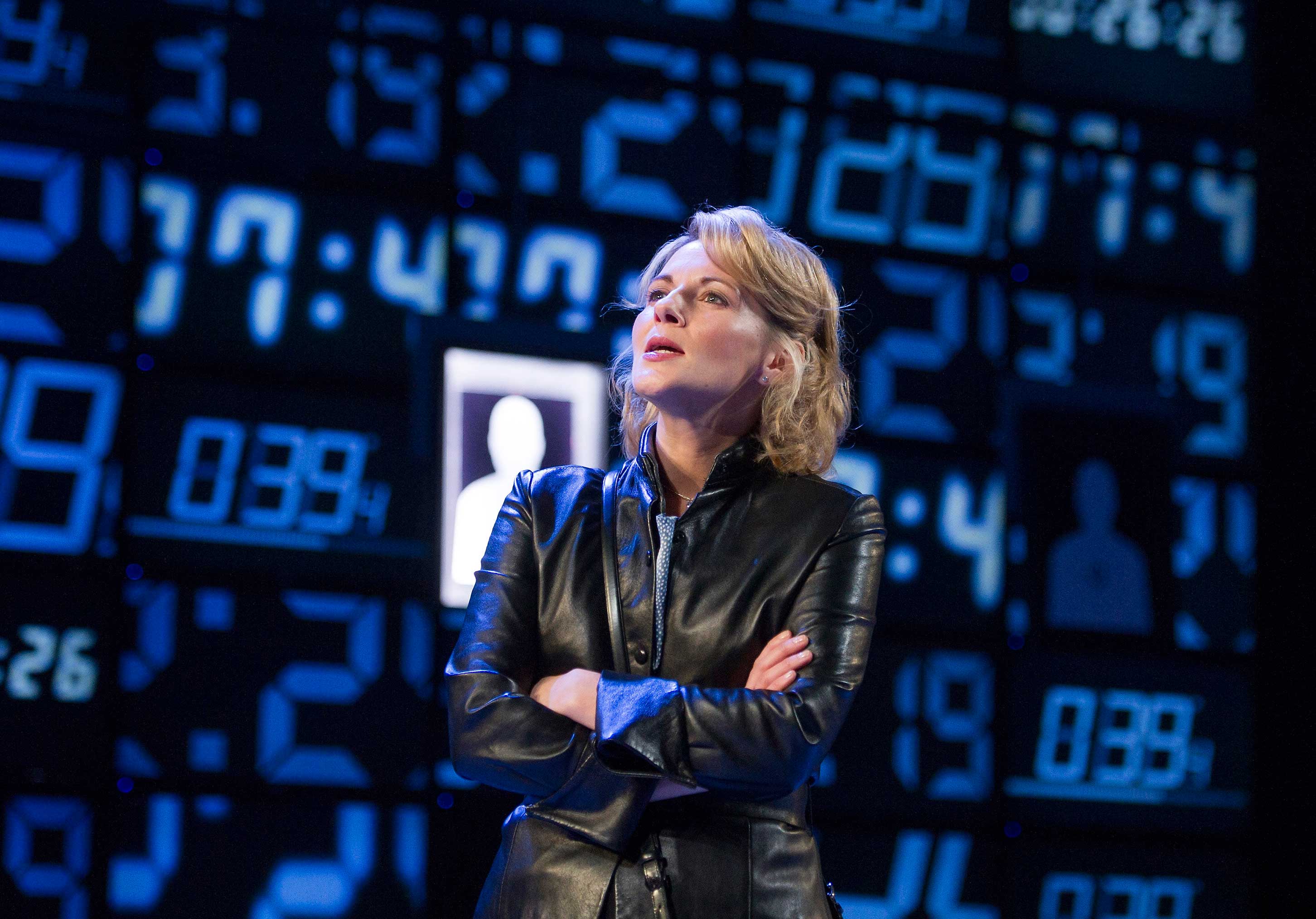 |
The Master Builder, The Old Vic **
Ibsen has never felt so boring as in David Hare's adaptation and in Matthew Warchus' production. Whilst in preview, the relationship between Ralph Fiennes' Halvard and Sarah Snook's Hilde had no real chemistry and Rob Howell's was not evocative or grand enough to warrant two intervals. In this barn of a building, this production provides a truly depressing evening.
Escaped Alone, Royal Court *****
 |
Escaped Alone, Royal Court *****
 |
Caryl Churchill's latest play is a magnificent meditation on loneliness is realised terrifically by James Macdonald. The jumps from Churchill's typical detached conversations to the terrifying streams of consciousness of Linda Bassett as Mrs Jarret wonderfully displace and confuse the audience but also contains a side-splittingly funny monologue about cats from Sally (Deborah Findlay) and an equally well constructed serious one from Vi (June Watson). It is so refreshing to see exiting new work containing wonderful parts for older female actors in a house which clearly acknowledges that everyone needs to be included in forging the future of theatre.
 |
The Mother, Tricycle Theatre ***
After the staggering success of Florian Zeller's The Father, his companion piece arrives at the Tricylce after it's run in Bath. Unfortunately, the two pieces are too similar to warrant two separate plays. However, it is a very successful production with Gina McKee giving a performance near the level of Kenneth Cranham's in the Father. Laurence Boswell's production is intellectually stimulating, with a more homely setting given by Mark Bailey than the one provided for the Father, but the production as a whole suffers for the lack of an original premise.
London Symphony Orchestra- Antonio Pappano, Barbican Hall *****
 |
London Symphony Orchestra- Antonio Pappano, Barbican Hall *****
Antonio Pappano is perhaps the greatest conductor of the 21st century. His enthusiasm seeps through into his interpretations of the great composers. Rachmaninov's Rhapsody on a Theme of Paginini was passionate and beautiful, with the 18th variation proving a jear-jerker as the theme is flipped. This was largely due to Lise de la Salle tremendous solo on piano. However the surprise came in the second half with Respighi's Roman Trilogy, a piece with which I was unaware. I expected little but what I got was one of the most inspiring 30 minutes of my life. Starting with the roar of the the Roman Festivals before moving to the more subtle Fountains and Pines, one saw all humanity through this piece, from brash and pompous, to beauty and modesty. You saw the huge debt the piece owed to the Romantic movement but the piece was not Romantic. You felt Pappano's enthusiasm and emotion within the piece and came out cherishing every second of that experience. This was truly a heavenly evening of music that I feel so lucky to have witnessed.
 |
Sunday, 10 January 2016
wonder.land, National Theatre ***
 |
Tuesday, 5 January 2016
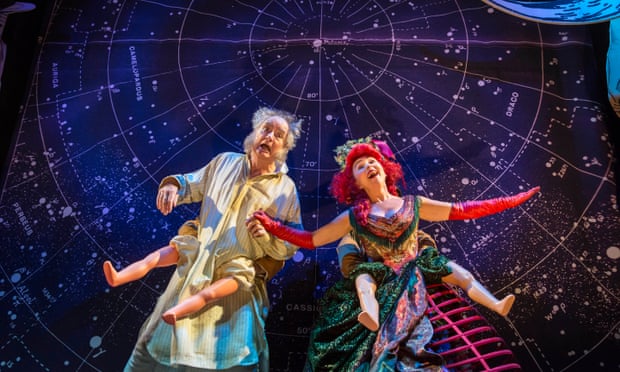
A Christmas Carol, Noel Coward Theatre ***
 |
In the Heights, Kings Cross Theatre *****
 |
I Want My Hat Back, National Theatre ****
 |
Thursday, 31 December 2015
The Dazzle, FOUND111 ****
 |
Little Eyolf, Almeida Theatre ****
 |
Thursday, 24 December 2015
You for Me for You, Royal Court ***
 |
Here We Go, National Theatre ****
 |
Cecilia Bartoli and Rolando Villazon, Barbican ****
 |
The Homecoming, Trafalgar Studios ****
 |
In spite of this, I really enjoyed Jamie Lloyd's 50th anniversary revival. The production feels like it should be at the Royal Court, with an electric and brooding feel, enhanced by Soutra Gilmour's bare bones set and Richard Howell's intense lighting design, that shocks and, whilst I have some objections to the text, it still has something to say. Lloyd makes everything these characters say gripping and painful and, with use of the Pinter pause, makes the silence as painful as the awful words being said. Keith Allen's Sam is somewhat over-camp for my liking, with his performance bordering on caricature, but the rest of this stellar cast are exceptional. Ron Cook is a domineering as Max, the control freak who can't control his own family. John Simm's magnetic Lenny is psychotic, with his amicability punctuated by violent anecdotes as John Macmillan's as with John Macmillan's simple yet menacing Joey. Gary Kemp's Teddy is perhaps the most hateful of the lot, with his passivity and acceptance in the second act demonstrating how intellect doesn't always change people's base behaviour. Gemma Chan is hypnotic and fascinating as Ruth who is just as twistedand perverse as the other characters yet appears to be more of a victim then the others. For me, this is the best production I have seen from the Jamie Lloyd residency at the Trafalgar Studios with a production of a play that challenges and provokes strong responses from anyone who watches or reads it.
Jane Eyre, National Theatre *****
 |
Wednesday, 23 December 2015
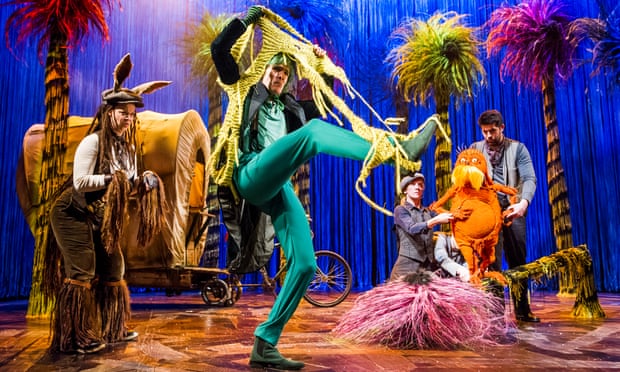
The Lorax, The Old Vic ****
 |
Macbeth, Young Vic *****
 |
The Force of Destiny, London Coliseum ***
 |
The Mikado, London Coliseum ****
The Moderate Soprano, Hampstead Theatre ****
 |
Medea, Gate Theatre Notting Hill *****
 |
Subscribe to:
Posts (Atom)